
How Much Handling Is Too Much for a Bearded Dragon? |
Use short, supported sessions and your dragon's behavior as your guide |
Conny Jo
Sep 27, 2026
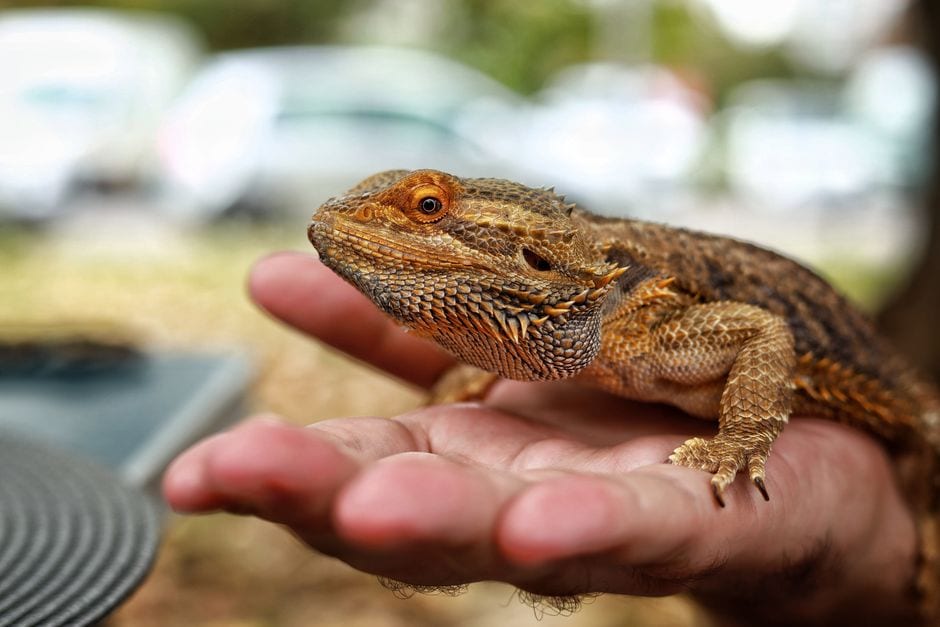
A calm-looking dragon is not automatically asking for a longer cuddle.
In a study of gentle handling, dragons handled for longer periods showed slightly more anxiety-related behavior in later tests than those handled for less time.
The authors tested particular durations and conditions; their results are not a stopwatch rule for every pet.
Instead, make handling predictable: approach calmly, support the body and all four feet, and stay close to a safe surface.
Give a new or unsettled dragon time to adjust to the enclosure before adding lengthy sessions.
Short, positive interactions make it easier to notice whether a dragon remains relaxed or starts trying to leave.
Handling is a relationship built through repeated low-pressure experiences, so a session that ends while the dragon is still settled is often easier to repeat than one that stretches until it struggles.
Let the animal see your hand, lift gently from beneath, and avoid squeezing its chest or leaving its hindquarters unsupported.
Remember that a study's group-level signal cannot tell you exactly how an individual dragon feels in your living room. |
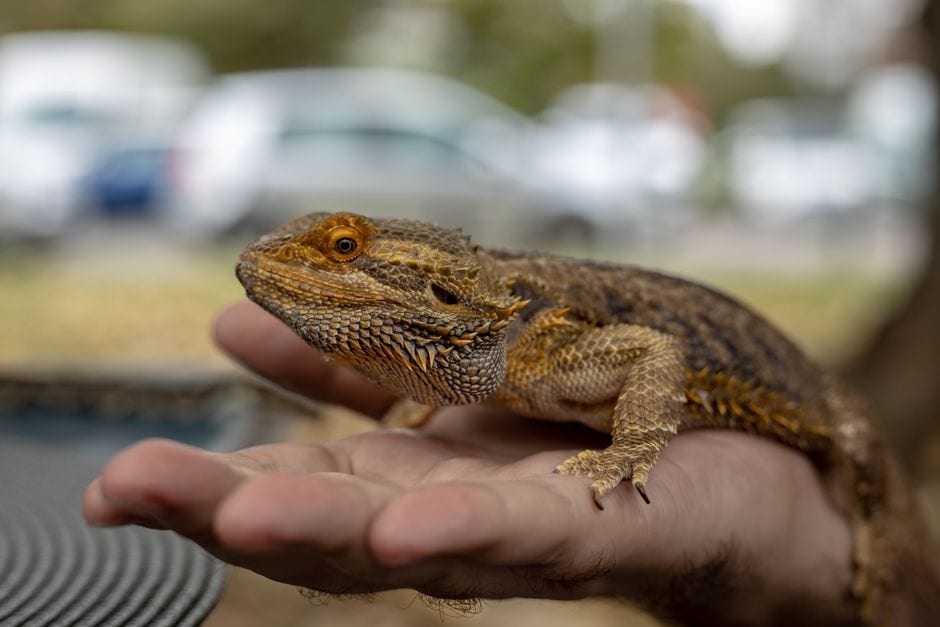 Photo by Boris Hamer on Pexels |
Watch the whole scene rather than interpreting one movement by itself.
Repeated escape attempts, a sudden defensive posture, or persistent agitation are reasons to end the session and let the dragon settle.
Temperature and access to its basking area matter, too; a long trip around the house can interrupt the animal's normal routine.
Note what happens after you return it: does it bask, eat, and behave as usual?
The published paper explains that further work is needed on whether dragons become accustomed to longer handling with experience.
For a broader review of habitat and everyday care, see VCA's housing guidance.
If your dragon suddenly resists handling along with appetite, movement, or behavior changes, speak with a reptile veterinarian instead of trying to train through it.
A useful log can be as simple as the time of day, how long the session lasted, whether the dragon tried to move away, and what happened after it returned to the tank.
Compare similar situations rather than one isolated encounter: a dragon may behave differently during a shed, after a move, or when its basking routine has been interrupted.
Children and visitors need the same gentle approach, and an adult should keep the animal secure so an unexpected movement does not become a fall.
If the dragon resists being lifted, try quiet presence and a shorter interaction another day instead of repeatedly reaching in.
Handling should fit around the dragon's care needs; it should not replace time to bask, eat, hide, and rest. |
17 Comments
Join the conversation
The close to a safe surface tip is real. My dragon once jumped from shoulder height and scared us both half to death. Now I always sit on the floor or hold him over the couch.
Predictable handling routines really do seem to help. Same time of day, same spot, same calm approach. Mine started walking toward my hand instead of away after a few weeks of consistency.
Rosa BeltranThe walking toward your hand thing is so rewarding when it finally happens. Took my boy about a month of consistent routine before he stopped bolting to the back of the tank every time I opened it. Worth the patience for sure.
Does anyone know if this applies to juveniles differently than adults? My juvenile seems to tolerate handling way less than my two year old but I'm not sure if that's age or just personality.
My vet actually mentioned something similar at our last visit. She said watch for the dragon leaning away or flattening out as early signs they're ready to go back. Subtle stuff.
I appreciate that they said this isn't a stopwatch rule. The number of posts I see where people are like exactly 15 minutes no more no less drives me a little crazy.
nadia_pet_momRight? The rigid timers drive me nuts too. Every dragon is different. Mine will sit on my chest for an hour sometimes and other days he's done after five minutes. You just have to read the animal.
Short sessions also just work better for my schedule honestly. Ten minutes a day keeps him used to me without turning it into a whole event.
The advice about letting a new dragon settle into the enclosure first is underrated. I made the mistake of handling mine on day two and she didn't eat for almost a week after.
What counts as anxiety behavior in the study though? Like is it bobbing, puffing, darkening? I'd love to know what signs they actually measured.
I always wondered why calm looking didn't mean comfortable. Glad someone actually studied this instead of just going by vibes.
Interesting but I feel like every dragon is so different. My boy Sunburst will sit on my shoulder for an hour looking totally chill and my sister's dragon freaks out after five minutes. Hard to generalize.
You're absolutely right, and the article actually flags this too, the study tested specific durations and conditions, so it's definitely not a one-size-fits-all stopwatch rule. Sunburst sounds like a wonderfully relaxed ambassador for his species!
The part about supporting all four feet is so important. My first dragon used to scramble and stress out until I learned to just keep a flat palm under her whole belly. Total game changer.
Priya M.This was my exact learning curve too. Once I stopped letting them dangle and just kept a flat hand under them the difference was immediate. Wish someone had told me that on day one.
This actually explains a lot. My beardie Mango would start glass surfing after really long hold sessions and I always thought he just wanted to explore. Maybe he was just done and I wasn't reading it right.
TucsonReptileDadGlass surfing after holds was a big one for me too with my first beardie. Looking back I definitely kept her out way too long thinking she was enjoying it. Took me a while to realize restlessness isn't the same as curiosity.