
What Is Your Bearded Dragon Trying to Tell You? |
A lively field guide to beard displays, arm waves, head bobs, and the clues around them |
Conny Jo
Sep 22, 2026
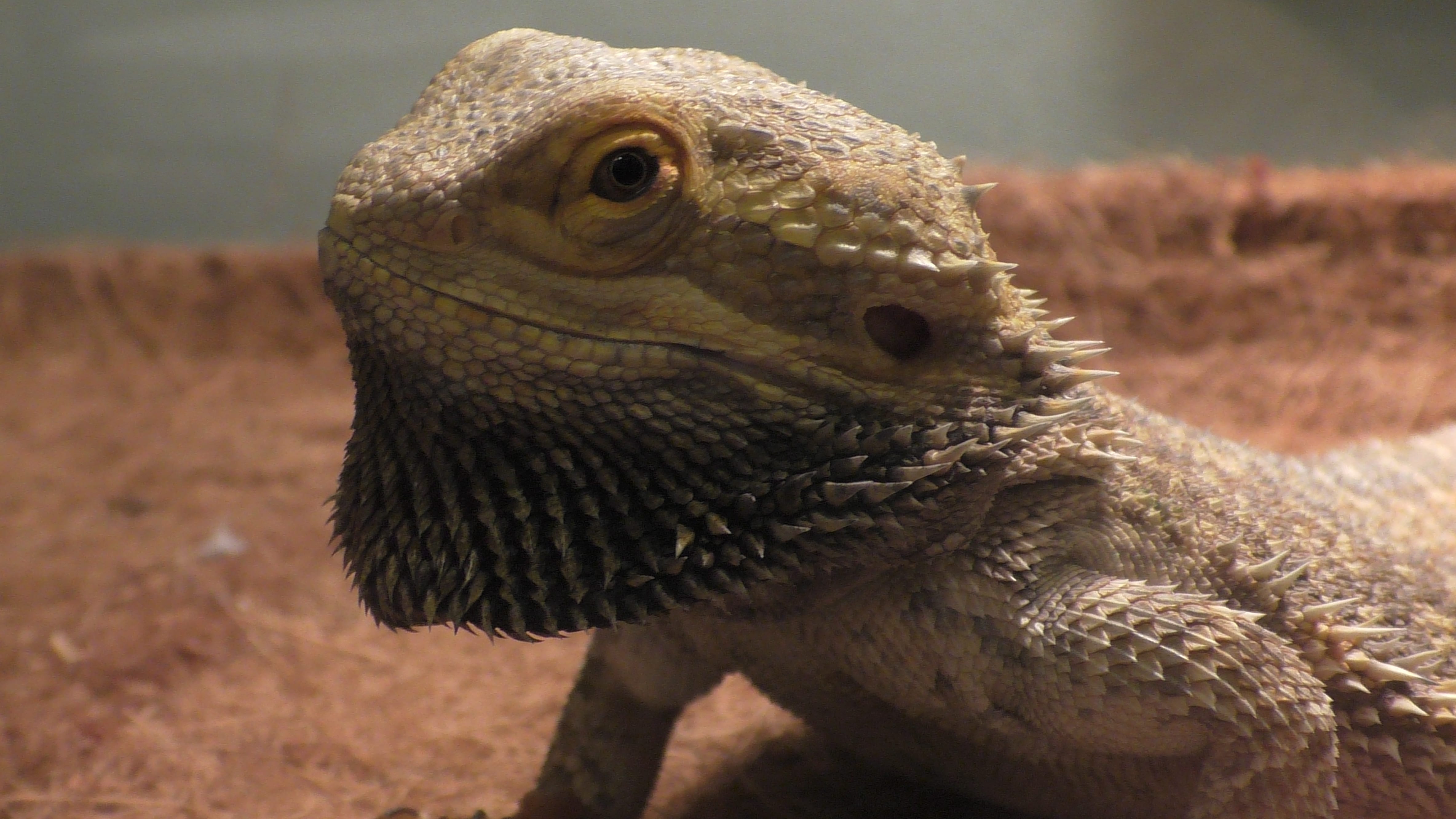
Watch a bearded dragon for five minutes and you may see an entire little drama unfold without a sound.
One moment it is perched like the ruler of the basking rock; the next, its beard darkens and its body looks twice as wide.
It is tempting to assign a neat human emotion to each move, but these remarkable lizards deserve a closer look.
Body language makes more sense when you read the whole scene.
Notice what happened just before the movement, what the dragon does next, and whether its normal appetite and activity have changed.
Let us start with the famous beard: that spiny pouch under the chin can expand and turn dark when a dragon feels threatened, and it may also appear during mating behavior.
VCA Animal Hospitals describes both of those contexts, which is a useful reminder that a black beard is a clue, not a complete diagnosis.
If yours darkens during handling, pause and consider whether your pet wants more space.
If it happens around another dragon, a reflection, or a sudden movement nearby, note the trigger before deciding what to change.
A beard that stays dark while the dragon is weak, hiding, or refusing food calls for a broader health check rather than a guess about mood.
Now watch the front legs.
A slow lift and rotation of one arm looks almost like a tiny royal wave, and it is one of the species’ most memorable displays.
Researchers have not pinned down every meaning of that gesture; it is thought to be a communication signal and may sometimes indicate submission.
That uncertainty is part of the fun of observing an animal closely: we can describe what we see without pretending to read its mind.
Head movements tell another part of the story.
A bob near an arm wave, or repeated bobbing in an interaction, is worth recording alongside the other dragon’s response and the surrounding setup.
Film a short clip if you are concerned; it preserves the speed, posture, and sequence far better than memory.
Do not turn every bob into a firm claim about dominance, affection, or sex without the rest of the evidence.
Beardies are expressive, but one gesture rarely carries just one message.
When the animal looks alert, holds itself upright, explores, and returns to basking normally, you have useful baseline behavior to compare against later. |
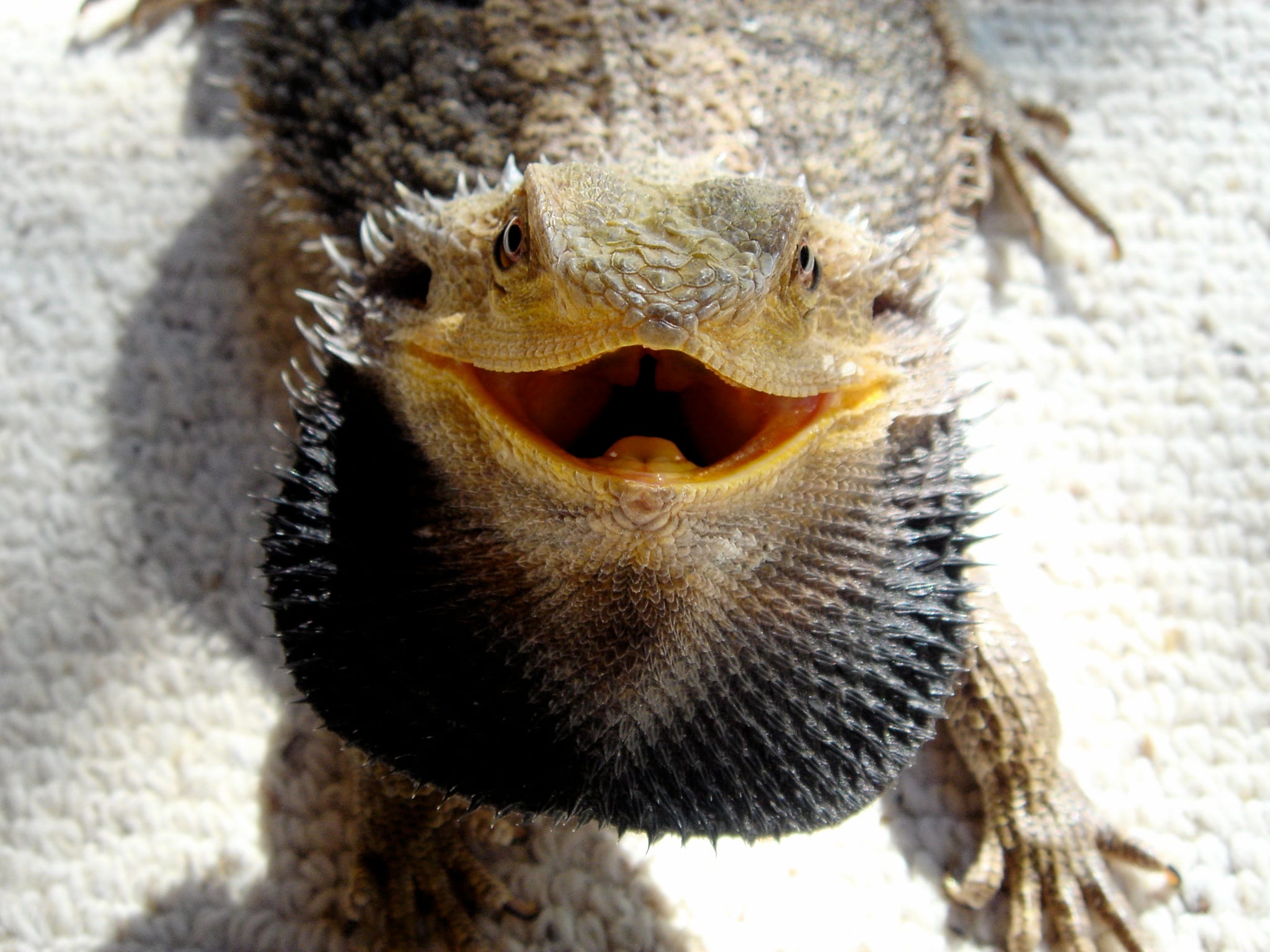 A beard display catches the eye, but context and the dragon’s overall behavior tell the fuller story. Photo: Wikimedia Commons. |
Here is where the detective work becomes practical.
Keep a simple note of basking, eating, shedding, stool, handling, and any new behavior for a week.
Patterns often reveal more than a single dramatic moment.
Did the glass surfing begin after furniture moved beside the tank, or when a reflection became visible?
Does the dragon settle when activity in the room quiets down?
These observations help you ask better questions, even when the answer is not obvious.
Check the habitat before blaming the personality.
Bearded dragons depend on appropriate heat, UVB lighting, hiding places, and room to move between warmer and cooler areas.
VCA’s housing guidance explains why temperature and lighting deserve regular checks.
A pet that cannot get comfortable may behave differently, and repeated stress signals are a reason to review the enclosure carefully.
Give the animal a choice during handling too: approach calmly, support the body, and return it to the enclosure when it repeatedly tries to escape.
That respectful approach is more useful than trying to force a photogenic pose.
Also remember that two beardies sharing a space can create problems even when a quick glance looks peaceful.
Competition for a favorite basking spot can be subtle, so ask a reptile veterinarian about housing if interactions are tense or one animal is declining.
And do not let an entertaining behavioral explanation hide possible illness.
If your dragon is weak, struggling to breathe, injured, or acting unlike itself for more than a brief episode, contact a reptile experienced veterinarian.
Bring your notes, a video, and details of the lighting and temperatures; those clues can make the visit more useful.
Most of all, enjoy the observation.
The little arm wave, the bold beard, and that watchful stare are invitations to pay attention to a living animal with its own needs.
The best keeper is a curious one: notice the signal, check the context, and respond to the dragon in front of you. |
34 Comments
Join the conversation
The royal wave description is so accurate it hurts. My beardie does it so slowly and deliberately and it absolutely looks like he's greeting his subjects. Whatever it actually means, it never stops being adorable.
Baseline behavior is so underrated. I kept a little notebook for the first month I had Bruno just writing down when he basked, when he ate, how long he explored. When something seemed off a few months later I actually had something to compare it to. Vet appreciated it too.
Marco DelucaThe notebook idea is so smart. I wish I had done that with my first beardie. Now with my second I track feeding days and basking times in my phone notes and it really does make it easier to spot when something is actually off versus just a weird day.
The filming tip is something I wish I'd read before my first vet visit. I ended up drawing a little diagram of the head bob on a notepad which the vet found very charming but not super useful.
First time beardie owner here and this actually helped a lot. I was convinced every beard darkening was an emergency. Nice to have a more grounded way to look at the whole picture instead of panicking every five minutes.
Priya RajanTotally been there. My first month with my beardie I was googling every single thing she did. The beard darkening when I picked her up had me convinced something was wrong for weeks. Turns out she just needed more time to get comfortable. Hang in there, it gets easier!
Does anyone else's dragon bob at the TV? Mine goes absolutely wild whenever there's fast movement on screen. I've started turning it away from the living room during my evening shows because he gets so worked up.
I love that this points out that one gesture doesn't have just one meaning. My friend kept insisting her beardie's head bob meant he was angry at her specifically. Context matters so much with these animals.
The part about a dark beard combined with hiding and not eating really stood out to me. My first beardie had all three of those things at once and I kept thinking it was just a mood. It wasn't. Please see a reptile vet if that combination shows up.
Thank you for sharing that, your experience is exactly why the article stresses that a dark beard alongside lethargy and appetite loss calls for a health check rather than a mood assumption. A reptile-savvy vet is always the right call when those signs appear together.
DerekThorn88Thank you for saying this. That combination is exactly what happened with my guy last year and I waited too long thinking it would pass. Early vet visit really matters. Your comment might help someone catch it sooner than I did.
I have two beardies and keeping them in separate rooms was the best thing I ever did. One could see the other through a doorway and both of them had dark beards constantly. They were clearly stressing each other out even at that distance.
Honestly I think people over-interpret these guys all the time. The arm wave especially gets described as everything from submission to greeting to just stretching. The article is right that we don't fully know. Sit and watch before jumping to conclusions.
My girl's beard went dark for almost a week straight and I panicked thinking she was stressed or sick. Turned out she could see her reflection in the glass door across the room. Moved her tank and she was totally fine. Always check the obvious stuff first.
The part about filming a clip is genuinely good advice. I spent like 20 minutes trying to describe my dragon's head bob to the vet and she had no idea what I was talking about. Showed her a video the next visit and she figured it out in seconds.
reptile_dad_joelSame experience here. I was trying to explain the speed and angle and my vet was just politely nodding. Video changed everything. I just keep a short clip folder on my phone now anytime something looks a little different.
My beardie Mango does the arm wave every single morning when I uncover his enclosure. I always assumed it meant he was happy to see me but now I realize I have no idea what he's actually trying to say. Kind of humbling honestly.
I love that the article says we can describe what we see without pretending to read its mind. That's basically my whole philosophy with my three dragons. Observe first, interpret carefully, and when in doubt call your exotic vet.
That's exactly the spirit we hoped readers would take away, careful observation is genuinely the most respectful thing you can do for these animals. And yes, when in doubt, an exotic vet who knows the full picture is always the right call!
The bit about wanting more space during handling is worth repeating. A lot of new owners don't realize that lizards can get overstimulated. Mine will flatten out wide and that's my signal to put him down for a bit.
Just got my first beardie three weeks ago. This is so helpful because I keep panicking every time he does something new. Going to try to just watch and note things down before assuming the worst.
first_timer_felixThree weeks in and already taking notes, you are already doing better than most! Honestly the note taking habit is huge. Patterns you would never remember off the top of your head suddenly become obvious when you write them down.
Really appreciate that this doesn't pretend every gesture has one definitive answer. A lot of content about beardie behavior presents it way too confidently. Observation over assumption is the right approach.
The head bobbing thing confuses me so much still. Mine will bob at me, bob at his water dish, bob at nothing I can see. Recording it is a great tip though.
Good point about establishing a baseline. I didn't realize how much my first beardie's behavior had changed until a new one showed me what normal actually looks like. Start noticing the boring calm days too.
Does anyone know if the beard darkening from a reflection is common? My beardie freaks out near mirrors and I never put it together until just now reading this. Going to move the tank.
Sandra K.Yes, super common! Mine would puff up and turn completely black staring at himself in the glass door of the enclosure. Took me forever to figure out why. Moving the tank helped a lot for us.
The arm wave is what got me into beardies in the first place. Saw a video of one doing it and immediately wanted one. Couple years later and it never gets old watching it happen in real life.
My beardie's beard went dark for almost two weeks straight and I was convinced it was a mood thing. Turned out it was a respiratory issue. Please take that persistent dark beard seriously and see a reptile vet.
Priya M.This is such an important point. Two weeks is way too long to just write off as a mood thing. Glad you caught it in time. A lot of new owners don't realize respiratory issues can look behavioral at first.
Been keeping beardies for about six years and I still catch myself projecting emotions onto them way too much. The reminder to look at the whole scene before jumping to conclusions is something I needed to hear again.
My girl does the arm wave constantly and I still have no idea what she wants half the time. Comforting to know researchers don't fully have it figured out either honestly.
Dave R.Ha, same with mine. She waves at me, at the wall, at absolutely nothing sometimes. At some point I just accepted that she has opinions I will never fully understand and honestly that is fine.
The part about filming a short clip is actually really smart. I started doing that with my beardie Mango and it helped so much when I finally took him to the vet. Way easier than trying to describe it from memory.