
What Should Go on the Floor of a Bearded Dragon's Tank? |
A practical substrate check for cleaning, accidental ingestion, and the dragon's needs |
Conny Jo
Sep 27, 2026
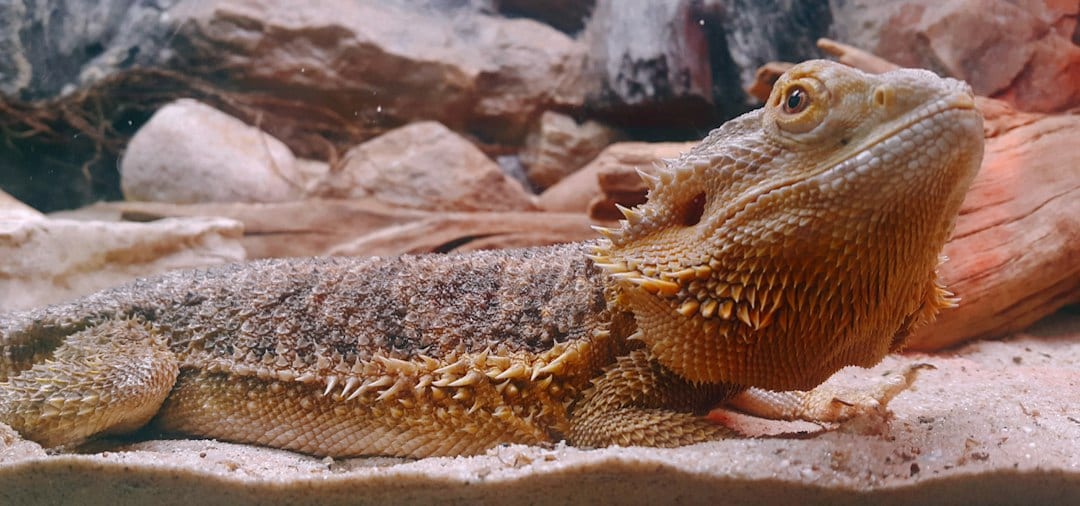
The tank floor is more than a backdrop: your dragon touches it, eats near it, and may swallow bits of it.
VCA's bearded dragon housing guide says substrate should be non-toxic and easy to clean in case it is accidentally eaten.
Start with that test before choosing a color or a desert look.
Paper-based surfaces are straightforward to replace and help you spot waste and changes in droppings.
Any textured or reusable surface needs regular cleaning, and rough edges or loose fibers are worth checking.
Loose materials deserve extra thought when insects are fed directly on the floor or the dragon has a history of eating substrate.
A floor that is simple to replace can be particularly useful when you are monitoring a new dragon, an animal under veterinary care, or changes in stool.
With a reusable surface, think through how you will remove waste, clean the material, and dry it before the dragon uses it again.
Loose particles are not all the same material, and risk depends on more than appearance; feeding practices, cleanliness, and the dragon's behavior all matter. |
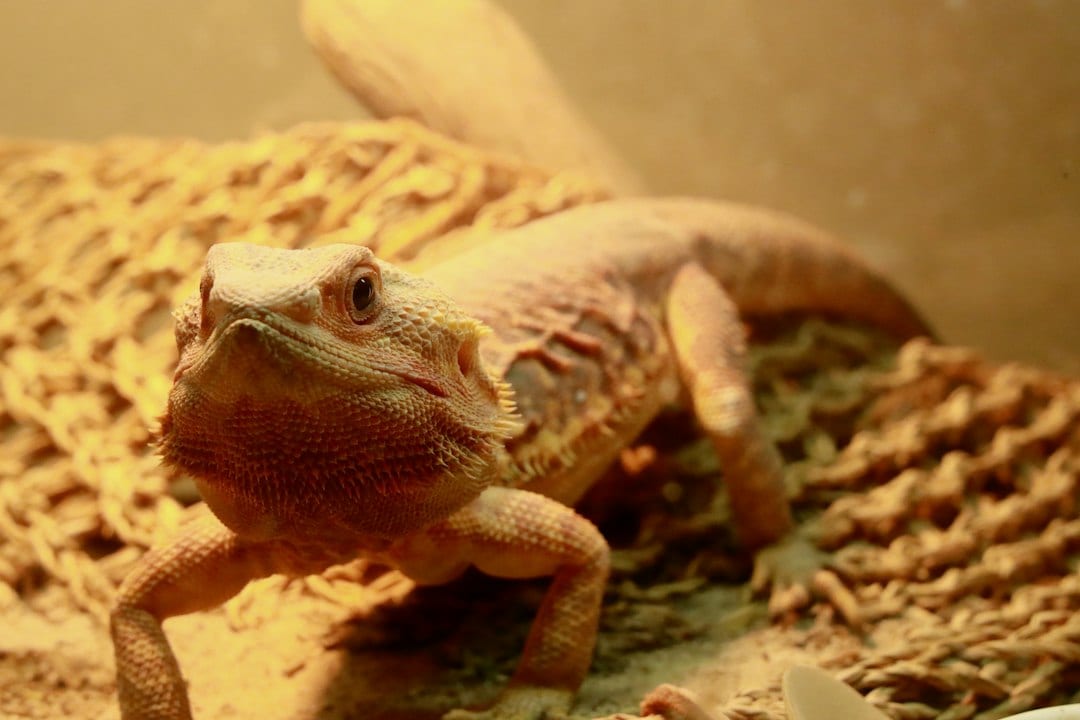 Photo by Richard Burlton on Unsplash |
Sand in a photograph does not answer whether a particular animal, feeding method, and husbandry setup make it a sensible choice.
UC Davis's care guide advises using a dish for feeding to reduce ingestion of cage substrate.
Keep a stable, clean basking area and make sure flooring choices do not interfere with the heat gradient or cleaning.
Check your chosen material after a week: how easy was it to remove waste, and did the dragon pick up any loose pieces with food?
If you see straining, loss of appetite, unusual lethargy, or concern about swallowed material, call a reptile veterinarian promptly.
The VCA owning guide is a useful companion for routine reptile veterinary care.
A good floor is one you can maintain safely, not just one that looks natural in a product photo.
Do not change flooring while overlooking the rest of the habitat: temperature, UVB, hydration, and diet are part of the larger husbandry picture that a reptile veterinarian can help assess.
If you are considering a naturalistic setup, write down your cleaning plan before you bring the material home.
Food bowls and a separate feeding area may help reduce direct contact between prey and loose substrate, but neither makes an unsuitable material automatically safe.
Look for dust, sharp fragments, shedding fibers, or damp patches that are hard to keep clean, and replace material that is deteriorating.
For a dragon with ongoing health concerns or a known habit of swallowing substrate, individual veterinary advice is more useful than a generic online ranking of floor products. |
17 Comments
Join the conversation
Does paper substrate make the temps harder to regulate? I always assumed it might affect how the basking heat spreads but I have not tested it properly.
Unpopular opinion but I think the naturalistic look is overrated if it creates more risk. My beardie does not care what the tank looks like.
My rescue beardie came from a loose walnut shell setup and had digestive issues for weeks after. The substrate question is so important and I wish more people took it seriously early on.
sara_m87Walnut shell is so rough too, I can not believe it is still sold as reptile substrate. Hope your rescue is doing better now!
Tried excavator clay once. Looked amazing but keeping it clean was a whole project. Back to simple stuff for me.
That's a great real-world example of why our article emphasizes easy cleaning as a priority, a substrate that looks stunning but demands constant upkeep can quickly become more hassle than it's worth.
ReptileDadPhilI had the same experience. The burrowing tunnels looked so cool at first but the moment one wall cracked it was a whole renovation. Slate tile is boring but it just works.
I appreciate that this points people toward a vet for actual health concerns instead of just guessing. Too many forums act like everyone is an expert.
What counts as rough edges on a reusable mat? Like are we talking visible fraying or just anything that does not feel totally smooth? Genuinely asking.
My boy has never shown interest in eating the substrate but I still switched to a safer option just in case. Not worth the risk for me.
Deborah K.Honestly that is the right call. Even if they never seem interested, one distracted feeding session and it can become a problem fast.
Loose substrate and live feeders on the floor is a combo that makes me nervous. My beardie goes full hunting mode and does not care what he swallows.
Jules_reptilesSame here. My girl locked onto a cricket once and came up with a mouthful of loose substrate along with it. Switched to tile after that and never looked back.
I use tile and honestly it is the best thing I ever did for my beardie setup. Easy to wipe down and holds heat pretty well too.
The part about spotting changes in droppings is actually really useful. I never thought about how dark substrate makes that nearly impossible.
Does anyone use the reptile carpet stuff? I keep reading mixed things about the fibers being a snag risk for claws. Wondering if beardies have the same issue.
We switched to paper towels after our girl ate a mouthful of loose sand and the vet bill was not fun. Paper is so much easier to just swap out too.