
Why Bearded Dragons Head Bob and Wave: Read the Whole Scene |
A lively guide to beardie body language, from social displays to signs that deserve a closer look |
Conny Jo
Sep 27, 2026
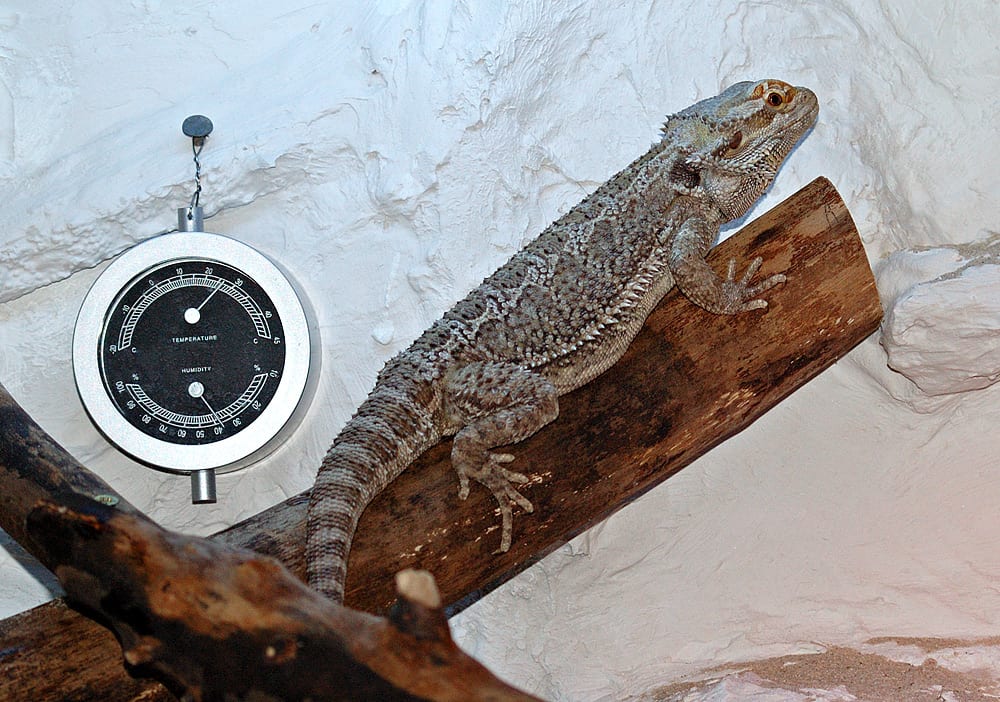
Picture a bearded dragon perched on a branch, looking every bit the tiny ruler of its kingdom.
Then the head starts pumping up and down, and suddenly your quiet pet has become the star of a reptile drama.
What is going on?
That head bob is part of a real visual language, and the fun lies in watching the whole scene rather than translating one movement into one fixed message.
Bearded dragons communicate with posture, color, head movements, and arm waves.
The Australian Museum describes those displays in wild central bearded dragons, while the UC Davis veterinary care guide notes the same striking behaviors in pets.
A head bob may be a social signal, especially when the animal is alert, watching the visitor, and showing other display behavior.
Speed and setting matter: a brisk display alongside a darkened, expanded beard tells a different story from a slow movement while the dragon calmly surveys the room.
The VCA guide to owning bearded dragons also describes the characteristic slow arm wave, sometimes paired with a slow head bob.
Now comes the charming bit.
A dragon may lift one front leg and circle it in the air, almost as if it spotted you across a crowded room.
It looks like a hello, but we should be careful about putting human words in a reptile's mouth.
An arm wave often appears in a social encounter and can be a lower-key response to another dragon's display.
Notice what happened just before it: a reflection, a nearby pet, a person looming overhead, or another beardie in view.
Does your dragon relax, keep basking, and go about its routine, or hide, flatten its body, and repeatedly try to get away?
Those clues tell you more than the wave alone.
The beard is another magnificent piece of equipment.
When a dragon expands or darkens it while facing a possible threat, the whole animal can suddenly seem larger and more formidable.
A dark beard is a cue to pause and assess the situation, especially if there is hissing, a defensive posture, or frantic movement.
Give the dragon room and look for the trigger instead of reaching in to force an interaction.
Here is a useful field-observer trick: spend thirty seconds noticing the animal before you interpret its gesture.
Has a new object, unfamiliar person, or possible rival entered the picture?
Is the dragon eating and moving normally over the rest of the day? |
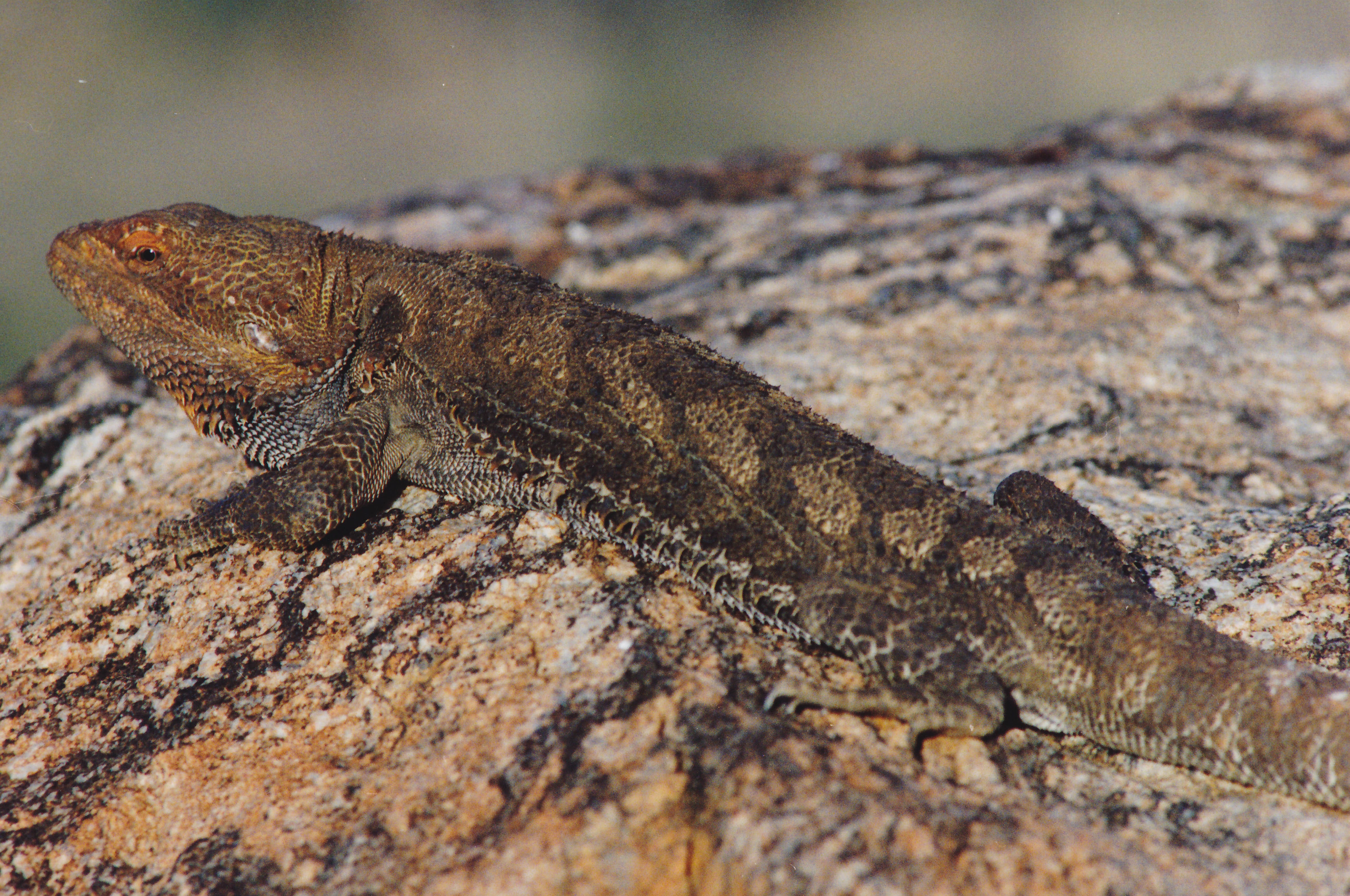 A beardie’s posture, beard color, and surroundings help put a head bob or wave in context. |
Look for a pattern, not a single dramatic moment.
Suppose your beardie bobs once at its reflection, then settles back onto a favorite perch.
That is a different situation from a dragon that stays dark, restless, and defensive whenever it can see another animal.
If a reflection seems to set off repeated displays, change the viewing angle or cover the reflective surface safely, then see whether the behavior eases.
Bearded dragons generally do best when owners take their social signals seriously instead of staging face-to-face encounters for entertainment.
Keep handling calm, support the body securely, and allow a retreat when the animal clearly wants space.
A healthy dragon is typically alert and able to hold itself upright, as the VCA care guidance explains.
That broad picture of health matters when behavior changes.
A repeated movement that looks unlike a deliberate social display deserves a closer look.
Trembling, poor coordination, weakness, trouble walking, an unusual head position, or a loss of appetite is not something to label a cute head bob from across the room.
Record a short video, note when the behavior began, and contact a reptile-experienced veterinarian if those signs appear or your pet seems unwell.
Video can help a clinician distinguish a normal display from a movement problem far better than a hurried description.
Check the basics of the enclosure as part of the investigation: proper heat, an appropriate UVB setup, a place to hide, and enough room to move between warmer and cooler spots.
Behavior can change when the surroundings change, so keeping a simple log is surprisingly useful.
After a week, you may recognize a pattern that was invisible in the moment.
Perhaps the glass catches a reflection at one hour of the day, or perhaps the dragon responds whenever a dog walks past the enclosure.
That is the exciting part of keeping beardies: the more carefully you watch, the more individual they become.
Neither personality needs to fit a tidy internet chart.
Read the dragon in front of you.
Enjoy the theatrical head bob and the impossibly polite-looking wave, but keep your curiosity paired with respect.
Watch the body, notice the setting, make the enclosure comfortable, and give your scaly performer the final say on how much company it wants. |
17 Comments
Join the conversation
Does the head bob frequency change during certain seasons? My beardie seems way more active and display-y in spring and I've always wondered if there's a seasonal pattern to it or if I'm just imagining things.
Rosalind F.You're probably not imagining it. Mine gets way more worked up in spring too, lots of head bobbing and beard puffing out of nowhere. I always assumed it had something to do with breeding season instincts kicking in even in captivity. Would be curious if anyone with multiple dragons notices the same thing.
I work at a pet store and we tell customers about the beard darkening all the time but almost nobody knows about the arm wave until they see it happen. Then they come back asking what it was. Nice to have something I can point people toward.
The arm wave always gets me because it genuinely looks like a polite little greeting. I know we're not supposed to project human feelings onto them but it is very hard when they're staring right at you doing that slow circle thing with their tiny arm.
CarolineBRight? My daughter named ours Biscuit and now every time he does the wave she waves back at him. I keep saying we shouldn't read too much into it but then he does it again and I'm waving too. We're a lost cause at this point.
Worth mentioning that if the dark beard is happening constantly and the dragon isn't eating or seems lethargic, that's a vet visit situation. Behavior context is great but some signs do need a reptile vet to look at. Good article otherwise.
First time beardie owner here and this answered so many questions I didn't know how to Google. My little guy was doing the arm wave thing and I genuinely thought something was wrong. Now I realize he was probably just reacting to my cat sitting nearby.
My two beardies are in separate tanks but they can see each other and the head bobbing between them is constant. It's like watching two people argue through a window. Might need to rearrange the room based on this.
Not sure I totally agree that context matters more than the behavior itself. A puffed dark beard is pretty consistently a warning sign in my experience regardless of what else is going on. Though I guess the trigger is still useful to know.
The description of them looking like tiny rulers of their kingdom is exactly my dragon. He sits on his log and just surveys everything like he owns the place. Which honestly, he does.
Lena_FortescueHa, mine does the exact same thing. Sits up on the highest point in his enclosure and just stares around the room like he's taking inventory. Very serious about it too, no expression whatsoever.
I've kept beardies for about 8 years and the fast aggressive head bob vs the slow relaxed one really are two totally different vibes. New owners especially should watch a bunch of videos just to get a feel for the difference before assuming their dragon is upset.
GeckoGuyPhoenixThis is such good advice, thank you. I panicked the first week I had mine because I had no baseline for what normal even looked like. Watching videos helped so much more than just reading descriptions of the behaviors.
Eight years of observation is exactly the kind of experience that sharpens that instinct, you're right that videos are a great supplement to reading about it, since speed and context are almost impossible to convey in words alone.
Can anyone help me figure out if a dark beard always means stressed or if it can just be a morning thing? My girl Duchess goes dark for about 20 minutes after her basking lamp turns on and then she's totally fine the rest of the day.
The bit about spending 30 seconds observing before you react is genuinely good advice. I used to just stick my hand in whenever he looked twitchy and that never ended well for either of us. Slowing down changed everything.
My beardie Mango does the slow arm wave every single time I walk past his tank. I always assumed it meant hello but now I'm paying more attention to what I was doing right before it happens. Pretty sure it's because he can see his own reflection in the glass door behind me.