
Your Bearded Dragon’s First 30 Days: A Week-by-Week Care Guide |
A calm, practical plan for the habitat, food, handling, and first vet visit |
Conny Jo
Sep 22, 2026
Before pickup: make the habitat work without the dragon.
Bringing home a bearded dragon feels like the exciting part, but the most useful first step happens earlier: run the enclosure and check it for several days before arrival.
Make sure the animal can move between a warm basking area and a cooler retreat, reach a secure hide, and bask under an appropriate UVB lamp.
Use thermometers to measure the habitat rather than guessing from how warm the glass feels, and check the lamp maker’s distance guidance for your specific fixture.
The RSPCA’s bearded dragon care guide explains why a working heat gradient and usable UVB matter; sunlight through window glass is not a substitute.
Put a shallow dish of fresh water in the enclosure, and make a plan for fresh greens and appropriately sized feeder insects.
If you are buying a young dragon, ask what it has been eating so you can offer familiar foods while you learn its routine.
Write down the dragon’s starting weight, the equipment you installed, and the name of a reptile-experienced veterinarian before you need an appointment.
Week one: let the new resident settle.
On arrival, let the dragon enter its prepared enclosure quietly and give it room to explore.
Offer food and water, observe from a distance, and resist turning the first evening into a photo session with repeated handling.
A move changes sights, smells, sounds, and routines all at once, so a cautious dragon may spend more time hiding than you expected.
The RSPCA advises against unnecessary handling during the first week while a new bearded dragon gets used to its surroundings.
Each day, check that the lights and heat work, replace water, remove waste and uneaten food, and note whether the dragon is alert, basking, eating, and passing droppings.
A brief care log gives you a clearer picture than trying to remember whether Tuesday’s appetite was better than Friday’s.
Do not treat a refusal to eat, persistent weakness, or a sudden change in breathing as a normal settling-in phase; call a reptile veterinarian when signs concern you.
Week two: turn observation into a routine.
Once your beardie is using the habitat, build a steady rhythm around lights, feeding, cleaning, and a quick visual check.
Offer a varied, age-appropriate mix of greens and feeder insects, and ask your veterinarian about calcium and supplement choices for this individual animal.
Bearded dragons eat both plants and invertebrates, but the balance changes as they grow; the RSPCA’s feeding guidance gives a starting point, not a reason to copy an adult diet for a baby. |
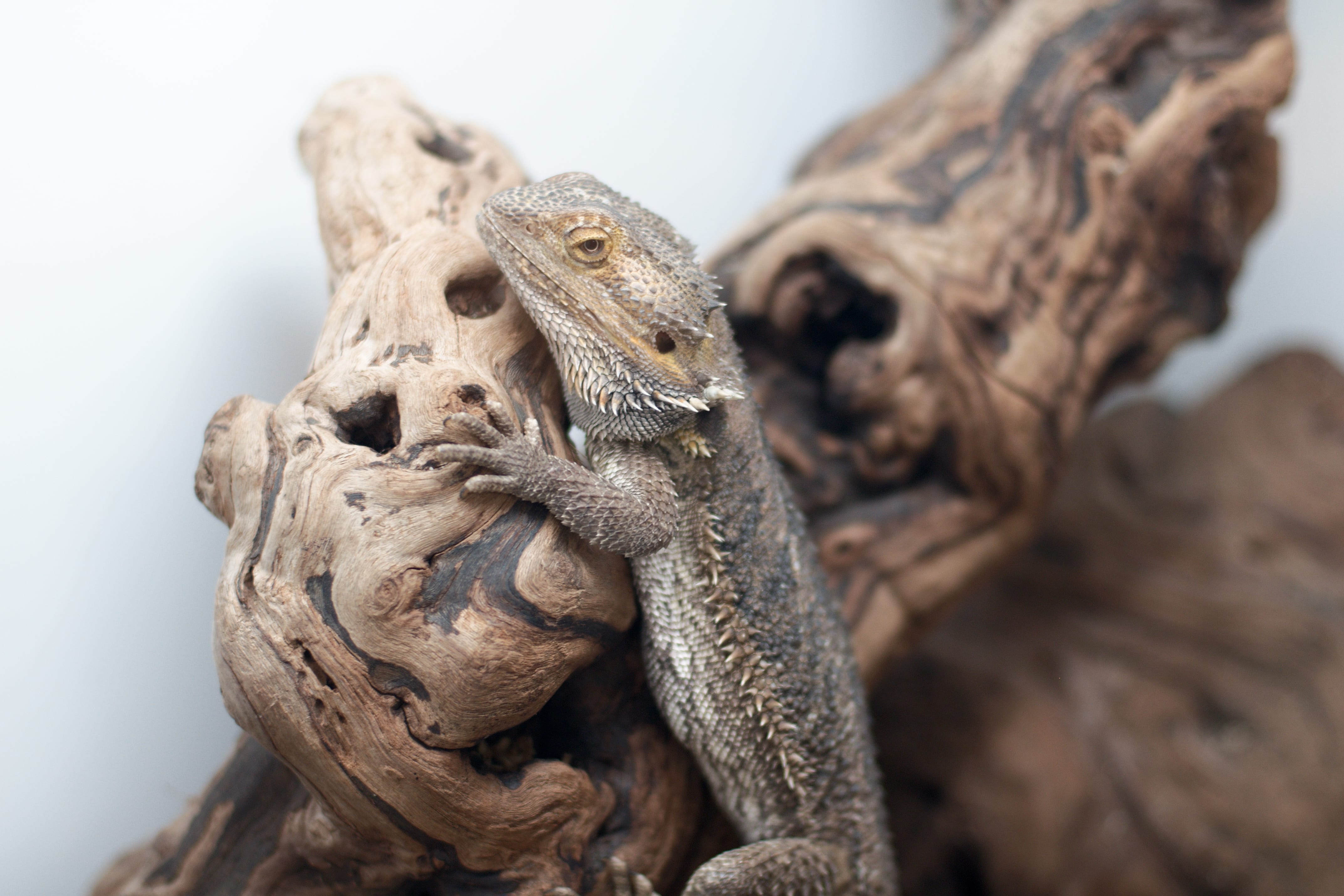 Give your dragon sturdy places to climb and bask, plus shaded places to retreat. Photo: Derrick Coetzee / Wikimedia Commons (CC0). |
Weeks three and four: build trust without rushing.
If the dragon is alert, eating, and no longer retreating from every nearby movement, you can begin short, gentle handling sessions.
Approach slowly, scoop from underneath, and support the body and all four legs; put the dragon back if it backs away or appears stressed.
Handling is a relationship you build at the animal’s pace, not a deadline you must meet by day 14.
Keep sessions brief so the dragon does not cool down away from its basking area, and wash your hands after handling or cleaning the habitat.
Add simple enrichment such as safe climbing branches, sturdy basking surfaces, and places to retreat, while keeping the enclosure easy to clean and inspect.
A hide on each end can let the dragon choose comfort without giving up access to its heat gradient.
Check your first month’s notes for patterns: Is the animal choosing to bask, exploring more, and maintaining its weight?
Use a gram scale consistently, but do not chase a single number or assume every dragon follows the same timetable.
Book the new-pet check.
Arrange a first visit with a reptile-experienced veterinarian early in the first month, even if your dragon looks well.
Bring the feeding history, enclosure details, weight notes, and a fresh stool sample if the clinic requests one.
The new reptile visit guidance from VCA recommends a health check soon after acquisition and describes how the visit can cover husbandry and parasite screening.
Ask the veterinarian to review your UVB setup, diet, and supplement plan, especially for a growing dragon.
Seek veterinary advice promptly for marked lethargy, repeated refusal to eat, breathing trouble, discharge, swelling, trouble walking, or notable weight loss rather than diagnosing the problem from a social post.
Your 30-day win is a baseline.
At the end of the month, you do not need a dragon that loves being held or an enclosure that looks perfect in photos.
You need a habitat you can measure, a feeding routine suited to your dragon’s age, a vet contact, and a clear sense of what normal looks like for this particular beardie.
Keep the notes going: the small observations you make now will help you spot changes later.
Photo credits: Hero image by Cliff, Wikimedia Commons, CC BY 2.0; middle image by Derrick Coetzee, public domain. |
_(2864614762).jpg)
17 Comments
Join the conversation
I would add that the calcium supplement question is genuinely worth a specific conversation with a vet rather than just copying what you see online. Oversupplementation can cause problems too and the right amount depends on the animal's age, diet, and UVB setup. Not one size fits all.
Writing down the starting weight is a small thing but it makes a real difference. We noticed our juvenile was losing weight slightly over a few weeks just because we had a number to compare against. Vet said catching it early helped a lot.
Dave_KThis is underrated advice. We skip the scales for a few weeks and suddenly have no idea if things are going the right way. Takes about 30 seconds and could save a lot of worry later.
The hiding more than expected thing is so real. My beardie barely came out for the first five days and I was convinced something was wrong. Turns out she just needed more time. Week two she was completely different, basking confidently and eating well. Patience really does help.
How long did it take before your dragon started coming to the front of the enclosure when you approached? Mine is on day nine and still hides when I get close. Trying to be patient but would love to know if this is normal at this stage.
The feeding balance changing as they grow is really worth emphasising. Baby dragons need a lot more insect protein than adults and I see people feeding their young ones mostly salad because they read a general guide written for adults. Check what age the advice is actually for.
Greenleaf_GeckosThis is such a good point. I made exactly that mistake with my first beardie. Found a care sheet online and followed it without noticing it was written for adult dragons. Vet had to straighten me out at the first checkup.
Finding a reptile vet before you actually need one is underrated advice. We had a bit of a scare in month one and spent ages panicking and searching for someone local who actually knew bearded dragons. Do that research first, not at midnight when something seems wrong.
I keep a basic care log in a notes app on my phone and honestly it is so useful. When our dragon had a slow week I could actually look back and see exactly when he stopped eating rather than guessing. Takes about 30 seconds a day.
The point about sunlight through window glass not being a substitute for proper UVB is really important and I think a lot of new owners get this wrong. Glass blocks almost all UVB so your dragon is basically just getting warm with no benefit. Please get a proper lamp.
You've put it perfectly, glass filters out the UVB wavelengths a bearded dragon actually needs, so a window perch simply can't replace a proper lamp no matter how sunny it looks. That's exactly why the article points to the RSPCA guidance and stresses checking your specific fixture's distance recommendations before the dragon even arrives.
Good advice about asking what the dragon has been eating before you take it home. Ours came from a breeder who was feeding mainly crickets and when we switched too fast she went off food for two weeks. Transition slowly if you can.
TomR_LeicesterSame happened with ours. Previous owner was feeding waxworms as a treat almost every day and when we stopped he sulked for ages. They can get really fixed on certain foods.
The part about not making the first evening a photo session made me laugh because I absolutely did that. Poor girl was trying to hide and I kept picking her up for pictures. She settled fine eventually but I felt bad looking back on it.
Donna AshworthHa, guilty of the same thing. My son was desperate to show his friends photos on day one and we had the dragon out for way too long. She went really dark and puffy. Lesson learned pretty quickly.
Can anyone share what thermometers they actually use? I have one of those stick on dial ones on the glass and I have a feeling it is not very accurate. My boy seems to bask longer than expected and I wonder if the cool side is not quite right.
The tip about running the enclosure for a few days before pickup is something I wish I had known before getting my first beardie. I just set it up the morning we went to collect him and spent days realising the basking spot was nowhere near warm enough. Do it early, people.